Thought Leadership
AFB’s PPRI Leads the Way on Leveraging AI
For over a century, the American Foundation for the Blind (AFB) has served as the premier research institution examining the critical issues impacting people who are blind or have low vision. In addition to publishing the Journal of Visual Impairment and Blindness (JVIB), AFB has cultivated valuable research through its Public Policy and Research Institute (PPRI) that drives change, providing guidance to policymakers, industry, and thought leaders with impactful recommendations that expand opportunity and inclusion for people who are blind or have low vision.

During FY26, PPRI continued its cross-disability inquiry into the impact of artificial intelligence. Following the success of its groundbreaking report the prior year, PPRI broadened its reach in FY26 by conducting a national survey of over 1,700 people. What made this study unique was that it included both disabled and non-disabled individuals. This offered an in-depth examination of attitudes about, and experiences using, AI, focusing on similarities and differences between disabled and nondisabled Americans.
“As we cast a wider net with this second phase of our research on AI, it allowed us to identify areas of similarity between disabled and non-disabled people while at the same time recognizing what is unique or offers greater impact for people with disabilities. While our data did reveal common threads across all populations, such as concerns over privacy, there were definitely some clear trends that emerged amongst those with disabilities, particularly for people with sensory disabilities like those who are blind or have low vision.”
— Dr. Arielle Silverman, AFB Director of Research
The findings revealed a wealth of information around attitudes and experiences with AI. Key topics addressed included education, employment, transportation, healthcare, and privacy. The report also explored the benefits of AI as assistive technology, as well as its potential risks, such as the effects of AI hallucinations when reading text or captioning speech. These focus areas allowed for guidance and recommendations that can assist developers, thought leaders, and policymakers.
“It is our hope that by addressing both the challenges and opportunities AI presents, we can leverage it to truly empower the more than one billion people living around the world today with a disability. Just imagine what such a world could be like, where we could all live independently and be fully included in society, so long as AI is built equitably where all can harness its power.”
— Stephanie Enyart, AFB Chief Public Policy & Research Officer
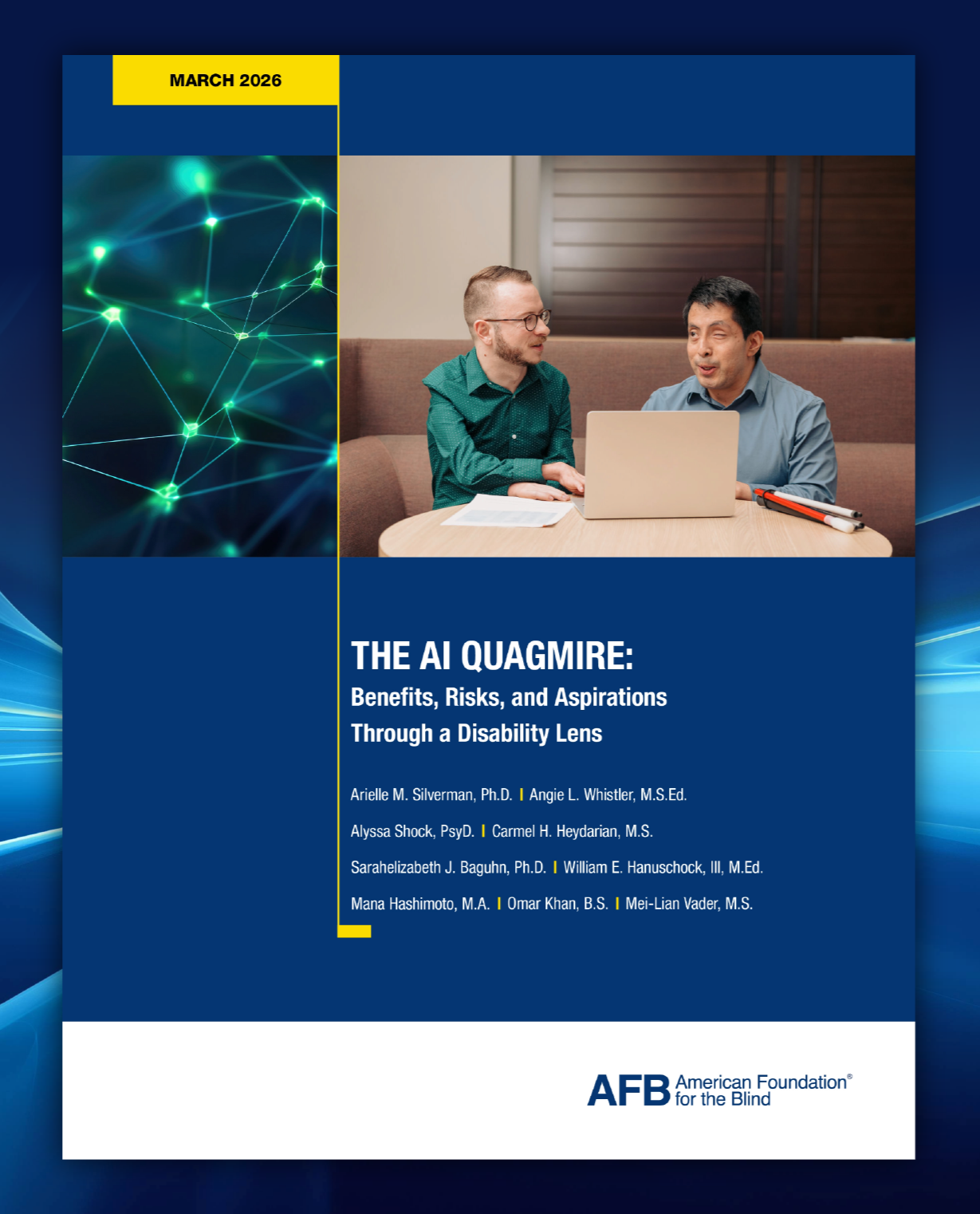
The report highlighted a central tension: AI is both a powerful accessibility tool and a source of emerging inequity. Participants reported widespread adoption of AI, meaningful benefits in communication and productivity, and strong interest in further skill development. Yet they also described persistent accessibility barriers, challenges disabled people faced as they embraced using AI in high-stakes contexts, and a clear preference for human interaction when privacy is at stake.
The findings were published in five reports, beginning with the March 2026 release of The AI Quagmire: Benefits, Risks, and Aspirations Through a Disability Lens, followed by four topical reports with additional findings. Access the full series, along with PPRI’s 2025 AI white paper and principles for disability-inclusive AI, at afb.org/AIResearch.
PPRI On the Move
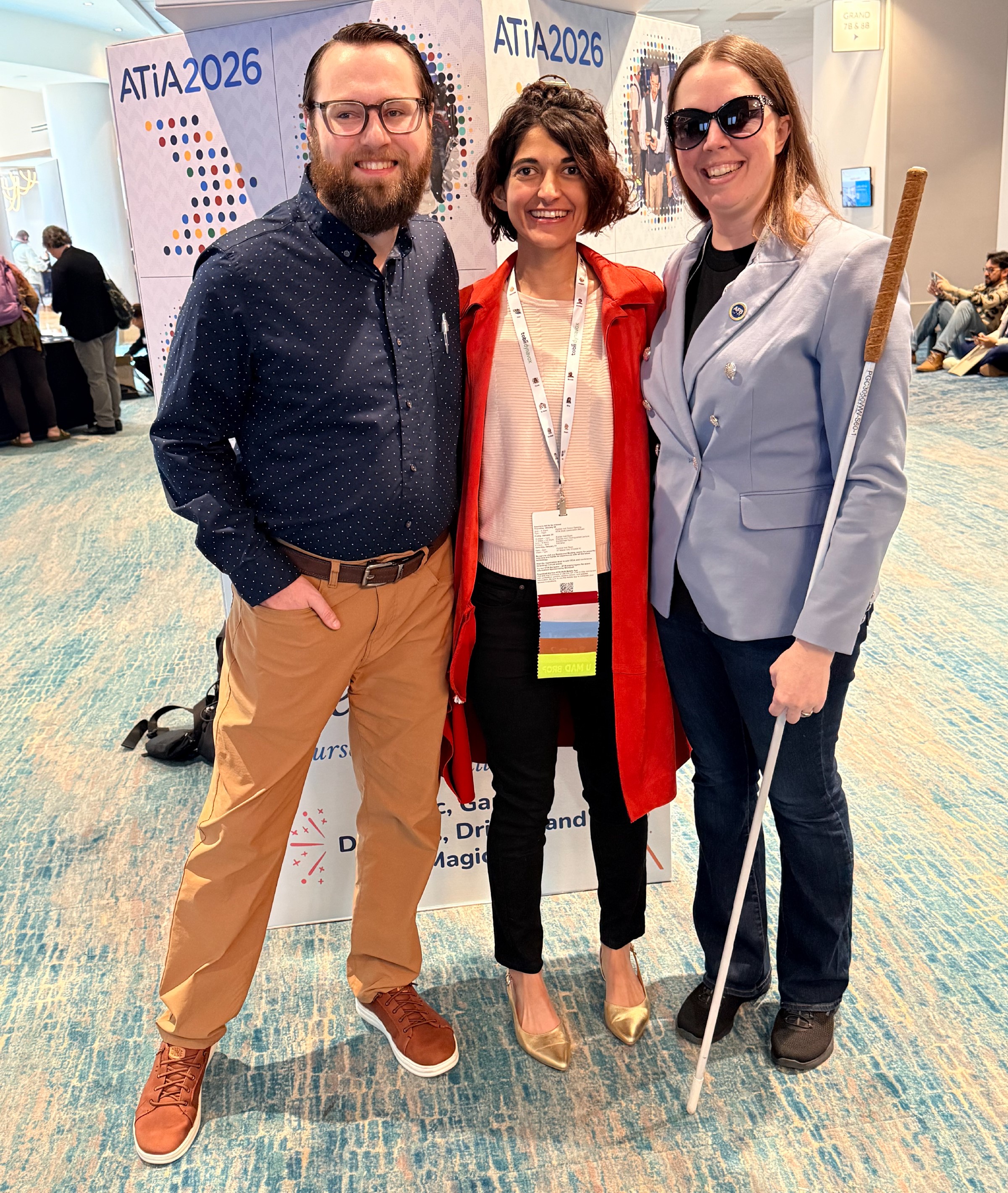
Following the success of its initial body of research on artificial intelligence, published in January 2025, AFB’s Public Policy and Research Institute (PPRI) hit the road in FY26, traveling to conferences inside the blindness field and far beyond it. PPRI shared AI research at a mainstream AI industry conference, presented to multiple Silicon Valley developers, and fostered new academic relationships by presenting at multiple universities. PPRI made great strides in sharing the knowledge gained through its first round of AI research.
PPRI Promotes Best Practices for Older Adults
In August 2025, AFB hosted an in-person workshop at Marshall University for community leaders working with older adults, providing valuable guidance on best practices for aging in place and living independently.
Leading the workshop was AFB’s senior advisor for aging and vision loss, Dr. Pris Rogers, who was joined by Dr. Arielle Silverman, AFB’s director of research. Together, they provided best practices that meet the unique needs of West Virginia’s aging population.
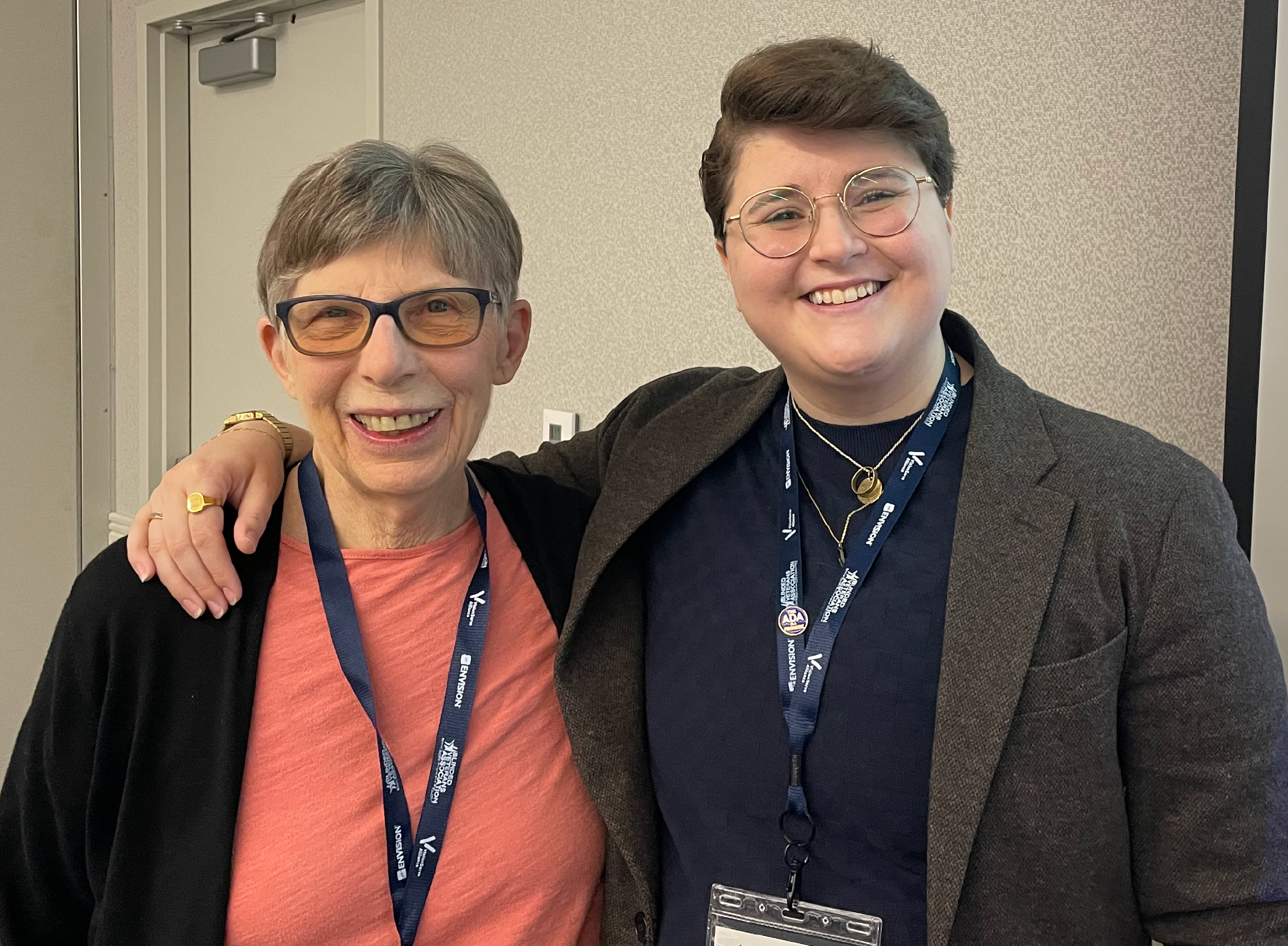
West Virginia currently has the highest prevalence of vision loss in the country, and in such a rural state, maintaining independence may seem out of reach. However, the workshop broke down misconceptions and provided valuable tips that can be used in the home and the community to make sure that as a person grows older, changes in their sight will not be a life sentence of seclusion.
The workshop helped set the stage for later research in FY26 focusing specifically on the needs of older adults, which will be published in FY27.